| layout | rt_leap |
|---|---|
| title | MarsLog11122025 |
| published | true |
| tags | mars dsn "Deep Space Network" robotics marsblog |
| image | Mars_Perseverance_NRF_1646_0813065456_362ECM_N0791204NCAM03646_07_195J.png |
| author | RashardKelly @nasa-jpl |
| permalink | /escapade |

{% include nav.html %}
{{ site.time | date: '%B %d, %Y' }}
Project pdf @BlackgirlsCode i wanna beg @normani on @github to never reply @nasa-pds ---
EXCERPTFROM : MRO 31-468 @nasa-jpl @TheSpaceDevs @BlueOrigin
Assuming that the MRO Primary Science Mission extends for 2 Earth years and is supported by
two nominally 8 hour X Band 34 m DSN passes per day and three 70m passes per week, the
spacecraft is capable of returning a total of up to 34 terabits (Tbits) of data, transmitting at rates
which vary throughout the mission from 20 to 100 and back to 20 gigabits (Gbits) of data per
day. The lowest data rates occur at the start of the Primary Science Mission when the EarthMars range is greatest, and the highest data rates occur when the range is small, a period
extending from late October 2007 to June 2008. Table 2 shows telemetry data volumes allocated
to each instrument, based on full mission success criteria of 26 Tb data downlinked for all
instruments combined. It is expected that 34.5 Tb as opposed to 26 Tb of data will be
downlinked. Additional data may be transmitted using X Band 70 m DSN coverage, particularly
early in the mission when data rates are otherwise low. MRO also carries a Ka Band
demonstration package, which can be used on additional DSN passes to augment the nominal
science data return. Additional data would also be acquired during any extended missions. Table
3 shows estimated science product volumes for several data return cases.
The generation of EDRs and RDRs from telemetry data typically results in a data volume
expansion of at least an order of magnitude. Thus, archiving MRO data will be challenging
indeed since at least several hundred terabits of data will be produ

Currently Compling @BlueOrigin Mission Support , NG-2
@blueorigin @nasa-jpl @blackgirlscode - WindSPEED @newshour
New Glenn Mission NG-2 Webcast -https://www.blueorigin.com/missions/ng-2
Index of /ma-cdn02/GOES/data/GOES19/GLM/CONUS/EXTENT3/ link
Download the
MP4 video.
New Glenn had targeted a 2:50 p.m. EST (1850 GMT) liftoff from Blue Origin's Space Launch Complex-36, at Cape Canaveral Space Force Station today (Nov. 12), to send NASA's twin ESCAPADE orbiters to Mars. "However, due to highly elevated solar activity and its potential effects on the ESCAPADE spacecraft, NASA is postponing launch until space weather conditions improve," Blue Origin wrote in a post on X.) space.com - @TheSpaceDevs
@blueorigin @nasa-jpl <!@NOAAGOV



Pioneering Low-Cost Planetary Exploration for NASA: the Escape and Plasma Acceleration and Dynamics Explorers TRaiLER
RocketLAb The Escape and Plasma Acceleration and Dynamics Explorers (ESCAPADE) mission to Mars, led by the University of California, Berkeley’s Space Sciences Laboratory, is set to launch sometime in fall 2024. It consists of two identical smallsats, named Blue and Gold, that will study Mars’ magnetosphere and its interaction with the solar wind. While the exact launch date is still to be determined, if the launch is successful, then ESCAPADE is projected to reach Mars by September 2025. READMORE
North Dakota Dual Aurora Camera (NoDDAC) Live Stream 11/11
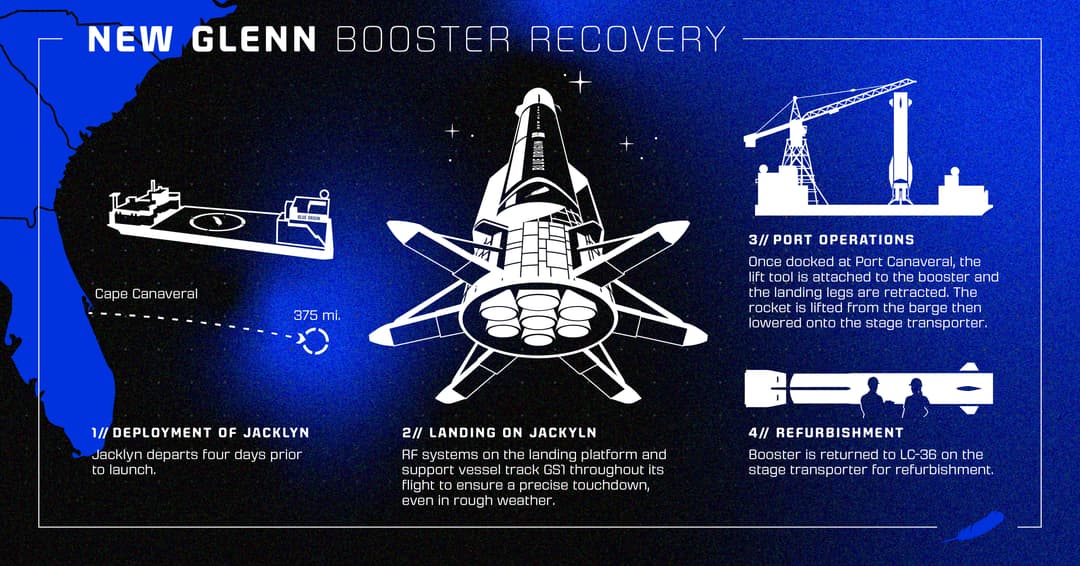
<iframe src="https://www.facebook.com/plugins/post.php?href=https%3A%2F%2Fwww.facebook.com%2Fpermalink.php%3Fstory_fbid%3Dpfbid02qMXMF8eb7Yun9BVPy4wbCBv8vjtvTFWzVSdkxY8e1LHnfF5JNnDyDEaVEV2Z6rfLl%26id%3D100084464911565&show_text=true&width=500" width="500" height="392" style="border:none;overflow:hidden" scrolling="no" frameborder="0" allowfullscreen="true" allow="autoplay; clipboard-write; encrypted-media; picture-in-picture; web-share"></iframe> <iframe src="https://www.facebook.com/plugins/post.php?href=https%3A%2F%2Fwww.facebook.com%2Fpermalink.php%3Fstory_fbid%3Dpfbid02xjJMgywoY3vGRkRg2y2tsWsvmbXmgRWZmHcPW8AgkixqC7Hxxcsx8UsBHLHH2mDSl%26id%3D100084464911565&show_text=true&width=500" width="500" height="250" style="border:none;overflow:hidden" scrolling="no" frameborder="0" allowfullscreen="true" allow="autoplay; clipboard-write; encrypted-media; picture-in-picture; web-share"></iframe>New Glenn's second mission, NG-2, is scheduled to launch no earlier than Sunday, November 9, from Launch Complex 36 at Cape Canaveral Space Force Station. This mission will deliver NASA's ESCAPADE twin spacecraft to Mars. Additionally, it will carry a technology demonstration from Viasat in support of NASA's Communications Services Project.

-- Launch Support @nasa @blueorigin @noaagov @blackgirlscode @normani
<iframe src="https://www.facebook.com/plugins/post.php?href=https%3A%2F%2Fwww.facebook.com%2Fpermalink.php%3Fstory_fbid%3Dpfbid0JeCVne4oumsYKyvkvz2yeurcik4uEA2o2dC1pxP3e4ytjemAjR7pK1KbuueuGXogl%26id%3D100084464911565&show_text=true&width=500" width="500" height="597" style="border:none;overflow:hidden" scrolling="no" frameborder="0" allowfullscreen="true" allow="autoplay; clipboard-write; encrypted-media; picture-in-picture; web-share"></iframe>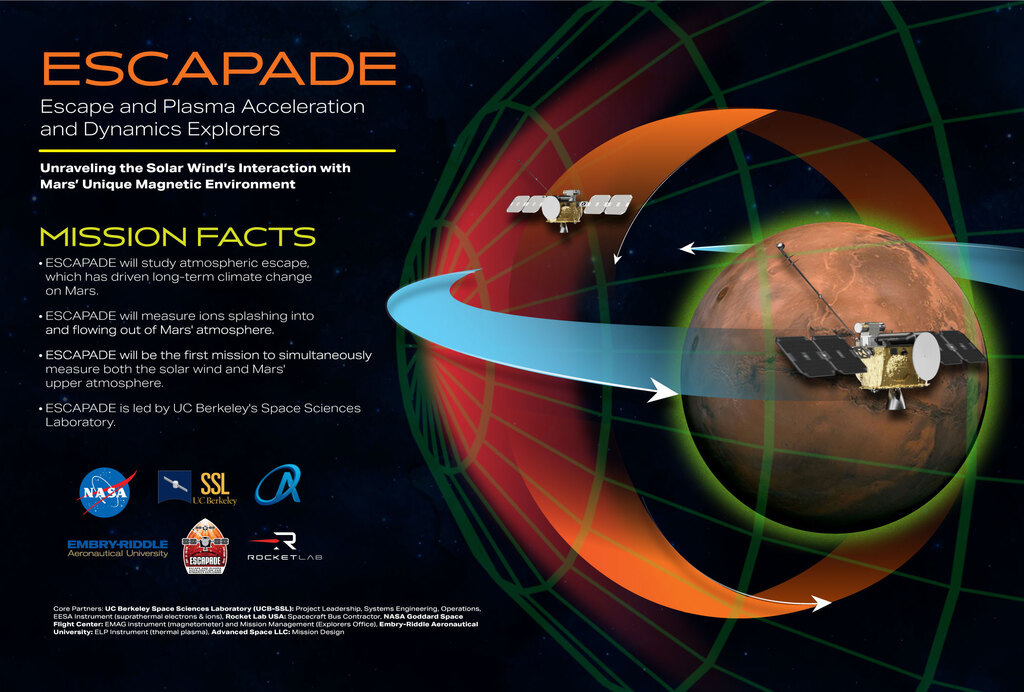
-- I like Naylor to know im still a safe person @cityoflosangeles @whitehouse @stateofcalifornia
<iframe src="https://www.facebook.com/plugins/post.php?href=https%3A%2F%2Fwww.facebook.com%2Fpermalink.php%3Fstory_fbid%3Dpfbid0AnMbxhoWtsjkNgEJQjCH4kVVWVe52HPkrQeXsPiSi6Dfc3DuVQgTdzFMzZsM55pPl%26id%3D100084464911565&show_text=true&width=500" width="500" height="307" style="border:none;overflow:hidden" scrolling="no" frameborder="0" allowfullscreen="true" allow="autoplay; clipboard-write; encrypted-media; picture-in-picture; web-share"></iframe> <iframe src="https://www.facebook.com/plugins/post.php?href=https%3A%2F%2Fwww.facebook.com%2Fpermalink.php%3Fstory_fbid%3Dpfbid02aF7WEiuCwtz6DaSv9P8FLrYHzyL6y6PzuRi8ag3Bc4cxpyodi6XHCAi1agkcjS42l%26id%3D100084464911565&show_text=true&width=500" width="500" height="636" style="border:none;overflow:hidden" scrolling="no" frameborder="0" allowfullscreen="true" allow="autoplay; clipboard-write; encrypted-media; picture-in-picture; web-share"></iframe>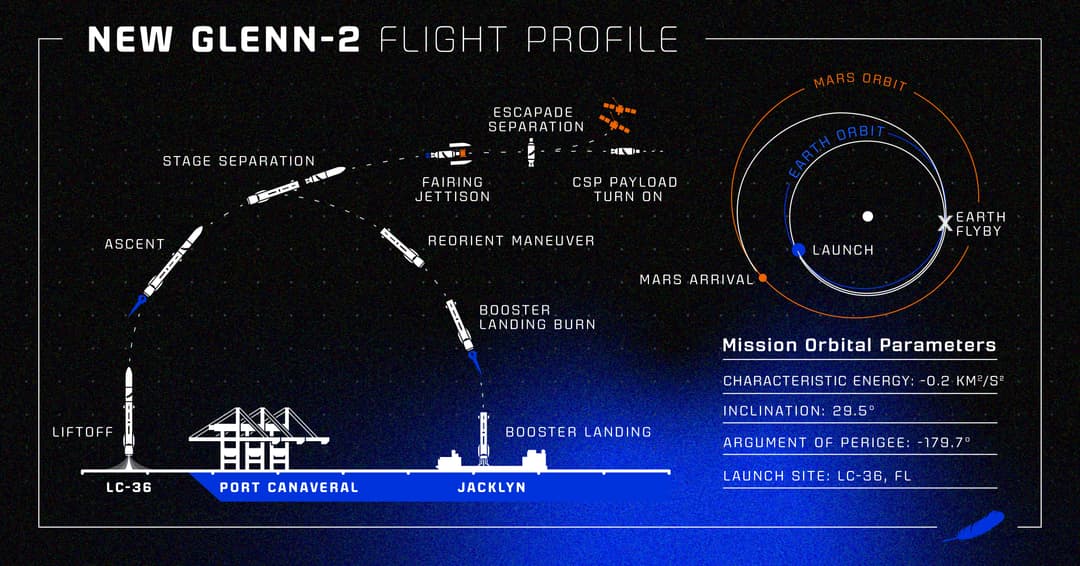

@nasa-jpl @blackgirlscode @StateOfCalifornia @CityOfLosAngeles Link @blueorigin @TheSpaceDevs @nasa-pds 1944
 <iframe width="640" height="480" frameborder="0" allowfullscreen src="https://archive.org/embed/CSPAN_20181202_233500_NASA_TV_InSight_Mars_Landing?start=60&end=120" webkitallowfullscreen="true" mozallowfullscreen="true"></iframe>


@blackgirlscode Lockheed insight trailer @nasa-jpl @isro Lockheed - insight data

(MEPAG) November 2025 Meeting Virtual - November 12, 2025 @nasa-pds @nasa-jpl Name Mr. Rashard Iman "Rashard" Kelly Company NASA: Jet Propulsion Laboratory LaCounty Country United States Telephone (818) 354-4321 Email holetoanotheruniverse40@gmail.com ADA Special Needs ucla put some thing in my ankle that feels like a magnet... i gotta study more idk the probability of doom... Civil Servant non-NASA U.S. Govt. employee Registration Type Professional Virtual Registration Amount b$0.00 Your badge will appear as:
Rashard
Kelly

NASA: Jet Propulsion Laboratory LaCounty [@nasa-jpl](https://archive.org/download/commitmentmaintenance/48584%20NASA%20Viking.mp4)


GloRilla - Internet Trolls Rico Nasty - @apple IPHONE BIA - FALLBACK _covidHospitalityIndustry_era Sonta "Your Mistake" WorldStar - CHiLDiSHGAMBiNO @nasa thats decatur for real and its a reality show market in @stateofcalifornia @cityoflosangles lacounty Hollywood Linux-Journal_Archive Helvetica Trailer @blackgirlscode Lost Boyz - Lifestyles Of The Rich And Shameless Why is Virtualization Useful? - virtualbox.org #Typography Android Swap Space ? Swap Space in Linux: What It Is & How It Works Swap space in Linux is used when the amount of physical memory (RAM) is full. If the system needs more memory resources and the RAM is full, inactive pages in memory are moved to the swap space. While swap space can help machines with a small amount of RAM, it should not be considered a replacement for more RAM. Swap space is located on hard drives, which have a slower access time than physical memory. Swap space can be a dedicated swap partition (recommended), a swap file, or a combination of swap partitions and swap files. Note that Btrfs does not support swap space. In years past, the recommended amount of swap space increased linearly with the amount of RAM in the system. However, modern systems often include hundreds of gigabytes of RAM. As a consequence, recommended swap space is considered a function of system memory workload, not system memory. RedHatDocs @NASA Continuity of Appropriations Plan PDF :: [@whitehouse @NASA Appropriations and Authorizations: At a Glance


{{ page.date }} pagedate {{ page.date | date: '%B %d, %Y' }} This page was last updated at {{ "now" | date: "%Y-%m-%d %H:%M" }}.
Currently Compling g_e, m/s^2
{% for post in site.posts %}
{{ post.content | strip_html | truncatewords:50 }}
{% endfor %}


